◷ 2:58
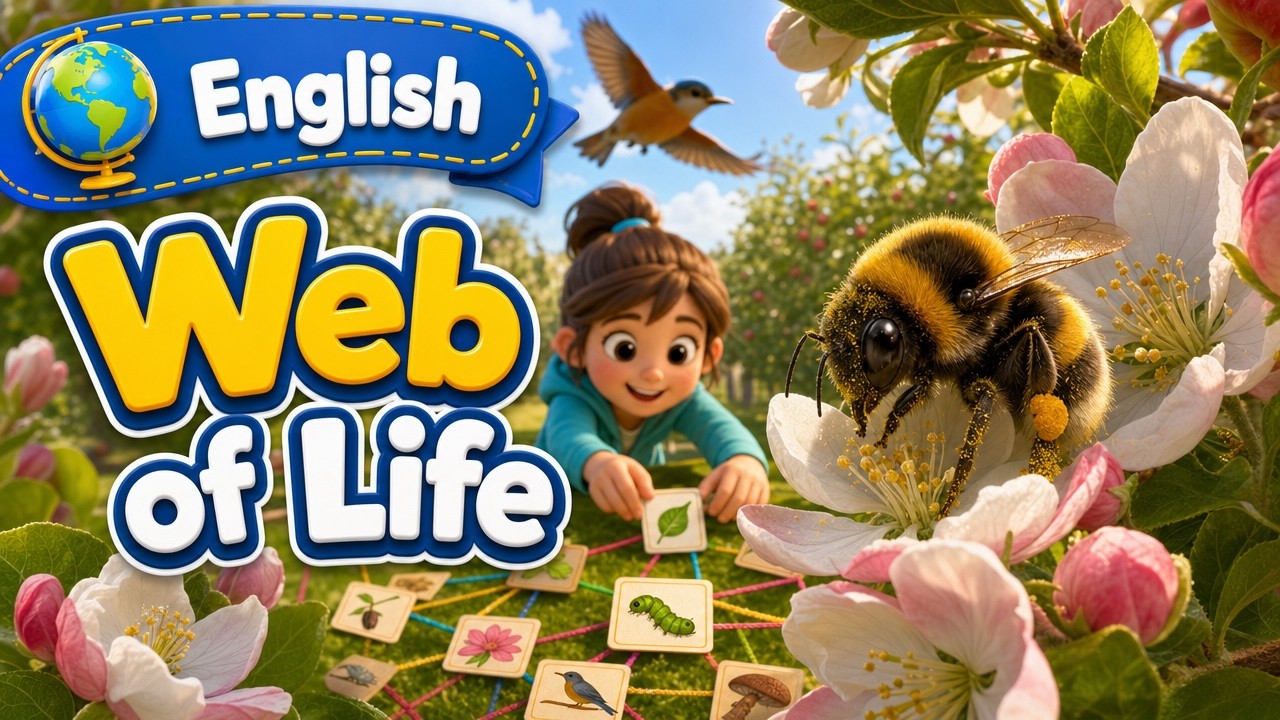
A bright science song for kids about the colors of flowers. Discover how sunlight and pigments in petals absorb some light and reflect other colors to our eyes. See how color, scent, and shape can help a bee find food while pollen travels between flowers and supports seed formation.
Original explanations based on the cited sources.
Light
Visible light is the part of electromagnetic radiation our eyes detect. It can carry energy even through a vacuum.
Sources
Pollination
In flowering plants, pollination transfers pollen from an anther to a stigma. It can enable fertilization and seed formation, but is not fertilization itself.
Sources
Pigments
Pigments absorb selected parts of light, helping give materials their colour. Plant pigments include green chlorophyll and yellow or orange carotenoids.
Sources
Text from the recording’s subtitles.
Song lyrics
Как радуга расцвела среди цветов?
Брызги из лейки поймали солнце.
В солнечном свете множество красок.
Лепестки алые, жёлтые, лиловые.
Один лепесток — на солнце, потом в тени.
Откуда взялся этот яркий цвет?
Лепестки не создают цветной свет.
Пигменты поглощают часть лучей.
Остальные отражаются в наши глаза.
Вот и яркий знак цветка.
Пчела садится в центр цветка.
Яркий цвет часто ведёт её сюда.
Запах и форма ведут её к нектару.
Жёлтая пыльца липнет к волоскам.
Лепестки не создают цветной свет.
Пигменты поглощают часть лучей.
Остальные отражаются в наши глаза.
Вот и яркий знак цветка.
За едой летит к следующему цветку.
Пыльца несётся дальше на её теле.
Это может помочь растению дать семена.
Лепестки не создают цветной свет.
Пигменты поглощают часть лучей.
Остальные отражаются в наши глаза.
Вот и яркий знак цветка.
В отражённом свете виден цвет лепестка.
Такой знак может привести пчелу к цветку.
Language version lyrics
How did a rainbow bloom by the flowers?
Mist from my watering can caught the sun.
Sunlight carries many different colors.
Red, yellow, purple petals gleam.
I watch one petal in sun, then in shade.
Where does its bright color come from?
Petals don’t make colored light.
Pigments soak up some of its rays.
Other colors bounce back to our eyes.
That’s the flower’s bright color signal.
A bee swoops down to the flower’s heart.
Bright color often helps it find this bloom.
Scent and shape guide it toward the nectar.
Yellow pollen clings to tiny hairs.
Petals don’t make colored light.
Pigments soak up some of its rays.
Other colors bounce back to our eyes.
That’s the flower’s bright color signal.
It seeks more food at the next flower.
Pollen rides there on its fuzzy body.
This can help the plant begin making seeds.
Petals don’t make colored light.
Pigments soak up some of its rays.
Other colors bounce back to our eyes.
That’s the flower’s bright color signal.
Reflected light reveals each petal’s color.
That signal can guide a visiting bee.

 2:35
2:35