Observing the living world
Check what equipment can actually show. Do not culture unknown microbes; choose suitable prepared slides.
Parents’ guide ↗A bright science song for kids about the colors of flowers. Discover how sunlight and pigments in petals absorb some light and reflect other colors to our eyes. See how color, scent, and shape can help a bee find food while pollen travels between flowers and supports seed formation.
Original explanations based on the cited sources.
Visible light is the part of electromagnetic radiation our eyes detect. It can carry energy even through a vacuum.
Sources
In flowering plants, pollination transfers pollen from an anther to a stigma. It can enable fertilization and seed formation, but is not fertilization itself.
Sources
Pigments absorb selected parts of light, helping give materials their colour. Plant pigments include green chlorophyll and yellow or orange carotenoids.
Sources
Text from the recording’s subtitles.
A short activity with an adult, matched to the film’s topic. Expand the instructions.
With an adult. Never shine into eyes; use a cool LED flashlight, no lasers or candles.
LED flashlight, opaque block, light-colored wall.
The block intercepts some light. The source position changes the shadow’s direction and size.
Instructions written by STEP BY STEP KIDS TV using the sources listed.
With an adult. Stay away from nests and never handle insects. If stings pose an allergy risk, observe through a closed window.
Outdoor flowering plant, paper, pencil, clock.
Flower-visiting insects may transfer pollen. A visit alone does not prove pollination; weather and time also affect observations.
Instructions written by STEP BY STEP KIDS TV using the sources listed.
After the film, explain what happened in your own words. Draw an example and choose a question to explore together.
Check what equipment can actually show. Do not culture unknown microbes; choose suitable prepared slides.
Parents’ guide ↗Choose a country
GeoLite2 · MaxMind ↗Advertising • affiliate links. We may earn a commission if you buy through these links.
Check the price, product requirements and delivery details at the store.
No approved offers match this choice. Learning resources remain available.
 2:35
2:35A bright science song for kids about the colors of flowers. Discover how sunlight and pigments in petals absorb some light and reflect other colors to our eyes. See how color, scent, and shape can help a bee find food while pollen travels between flowers and supports seed formation.
 2:47
2:47Why does the Sun rise later and set earlier in Poland during winter? This curious, rhythmic children’s song shows how Earth’s tilted axis gives Poland less time in sunlight. A simple lamp-and-globe model helps explain day, night, and the Sun’s low-looking path as seen from Earth.
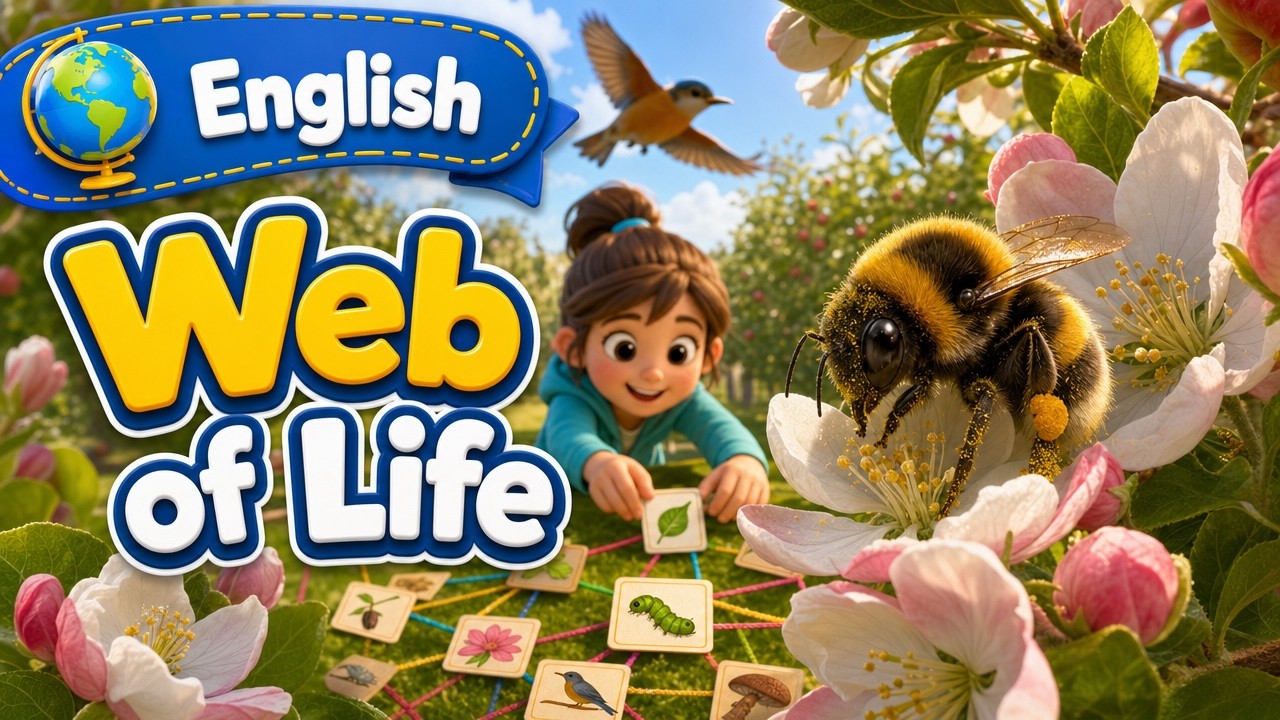 2:10
2:10Lena uses species cards and colorful strings to reveal the many connections in an ordinary garden. Pollination, food and decomposition become parts of a web rather than one straight chain. Children discover why losing a whole species may loosen one or several connections.
No content matches this choice yet. Try another language or topic.