
← Back to library
Русский · Songs

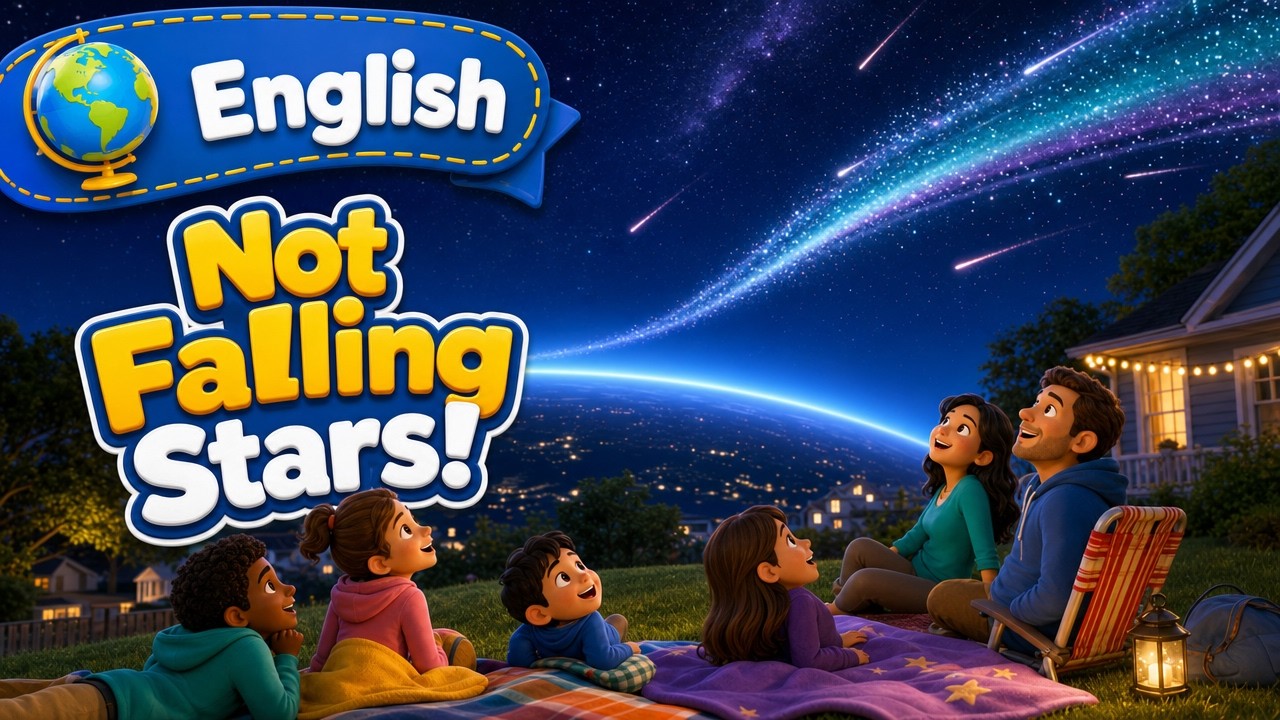
Perseids Aren’t Falling Stars! | Space Song for Kids | Russian audio

◷ 3:05

What makes those bright August streaks? This energetic space song shows how tiny grains from Comet Swift–Tuttle enter our atmosphere and create the Perseids. It also shares easy, safe viewing tips—no telescope needed.

Concepts explained

Concept glossary ↗

Original explanations based on the cited sources.

Sound

Sound is a travelling vibration in a material, such as air, water or metal. It needs a medium, so it does not travel through a vacuum.

Sources

Text from the recording’s subtitles.

Song lyrics
Правда, звёзды падают с неба? Нет — это крошки космической пыли! Настоящие звёзды огромны, не падают Эти крупинки оставила комета Свифт–Таттл кружит вокруг Солнца В нём лёд и пыль, обломки камней Он оставляет длинный шлейф частиц Земля входит в поток каждый год Июль и август; пик — в середине августа Комета сеет пыльный след Земля проходит сквозь него раз в год Не звёзды падают — ночь зажглась! Персеиды чертят линии света В атмосферу крошки входят со скоростью Пятьдесят девять километров в секунду Столкновения, сжатый газ их нагревают Крошки и воздух светятся мгновенье Почти все сгорают высоко в атмосфере Будто летят от Персея — вот их имя Комета сеет пыльный след Земля проходит сквозь него раз в год Не звёзды падают — ночь зажглась! Персеиды чертят линии света Найди безопасное место без огней На пледе смотри всё небо без телескопа Телефон убери; глазам дай полчаса Комета сеет пыльный след Земля проходит сквозь него раз в год Не звёзды падают — ночь зажглась! Загадать при вспышке — добрый обычай
Language version lyrics
Do stars really fall out of the sky? No — they're tiny grains of cosmic dust! Real stars are enormous; they don't fall A traveling comet left these grains Swift–Tuttle loops around the Sun With ice and dust and little bits of rock Scattering a long trail as it goes Each year Earth crosses that dusty stream July through August; most near mid-August A comet leaves a trail of dust Earth crosses that trail every year No stars are falling — night lights up! Perseids draw bright lines above Tiny travelers plunge through the air At fifty-nine kilometers per second Collisions and compressed gas heat them Grains and nearby air glow for a moment Most burn up high in the atmosphere They seem to stream from Perseus — hence the name A comet leaves a trail of dust Earth crosses that trail every year No stars are falling — night lights up! Perseids draw bright lines above Find a safe, dark place far from bright lights On a blanket, scan wide — no telescope Phone away; give your eyes about half an hour A comet leaves a trail of dust Earth crosses that trail every year No stars are falling — night lights up! Wish at the flash — a playful tradition
Open on YouTube ↗
3:08
Audio language: EnglishSongs

Perseids Aren’t Falling Stars! | Space Song for Kids

What makes those bright August streaks? This energetic space song shows how tiny grains from Comet Swift–Tuttle enter our atmosphere and create the Perseids. It also shares easy, safe viewing tips—no telescope needed.

Astronomy↗

3:13
Audio language: EnglishSongs

How Does a TV Make a Fish Move? A Kids’ Song

Maja turns on the TV and wonders how a fish can swim across the screen—and where its splash comes from. This song explores how a signal guides pixels and speakers, how changing still pictures appear to move, and how a vibrating speaker moves the air to make sound.

Technology↗
2:47
Audio language: EnglishSongs

The Sun’s Winter Clock: Why Are Days Shorter in Poland?

Why does the Sun rise later and set earlier in Poland during winter? This curious, rhythmic children’s song shows how Earth’s tilted axis gives Poland less time in sunlight. A simple lamp-and-globe model helps explain day, night, and the Sun’s low-looking path as seen from Earth.

Astronomy↗